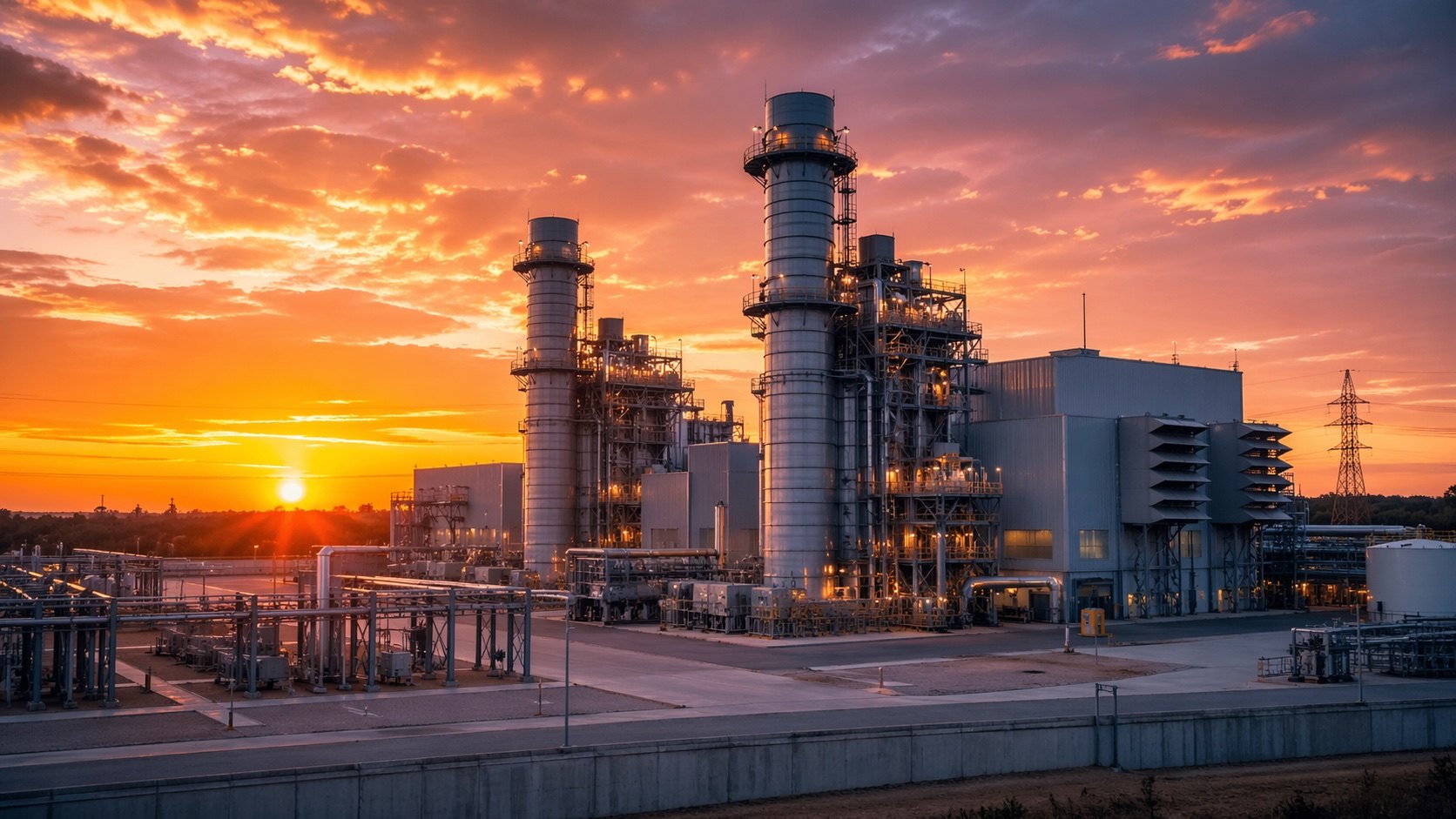
Stratum develops, owns, and operates the gas-fired generation platform
behind the intelligence economy — from the natural gas pipeline to the GPU.
PJMSIX POSITIONS · MID-ATL~6.9 GW
ISO-NEPERMITTED · 200K SF~0.2 GW
ERCOTFIRM GAS · HILL CO.300K DTH/D
MEDSOVEREIGN AI0.8→5.4 GW
The Platform
One owner across the entire power path.
Most developers deliver a piece of the diagram below. Stratum
delivers all of it — engineered, permitted, financed, and
operated as a single asset, on a single schedule, to a single standard.
SLD-01 · PIPELINE → GPU
Drag to read the full diagram →
Who We Are
A vertically integrated energy platform.
Stratum Energy Infrastructure is a vertically integrated power
development platform building gas-fired generation for the
loads that define the intelligence economy — hyperscale AI,
high-performance compute, and the industrial customers they enable.
The platform was founded by operators who have developed, financed,
permitted, and commissioned large generation assets across the United
States. We originated inside Pennsylvania Data Center Partners, where
the need for a single developer capable of underwriting the entire
power stack — not just a fenceline piece of it — became impossible
to ignore. Stratum is that developer.
Most energy developers stop at the fence line. Most data center
operators start at the substation. The seam between them is where
projects slip — schedules miss, costs run over, reliability gets
compromised. We close that seam. Every Stratum site is designed,
built, and operated as one integrated asset, delivered on a single
schedule, to a single standard of reliability and resilience.
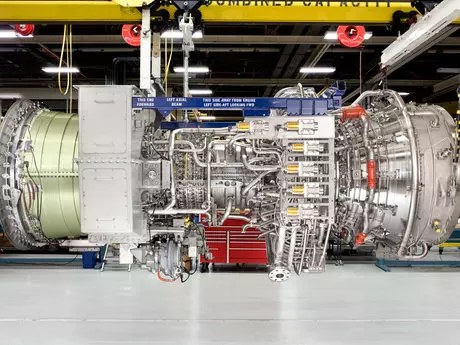
Aeroderivative generationReference fleet
The Joint Platform
One platform. Two flagship data center partners.
Stratum is the exclusive power infrastructure source for
Pennsylvania Data Center Partners and PowerHouse Data Centers —
two of the most active hyperscale campus developers operating today.
Every megawatt behind their flagship sites originates, integrates, and
energizes through the Stratum platform.
This is a joint origination and delivery platform, not a vendor
relationship. Stratum brings power capability, land control, fuel
supply, and interconnection strategy. Our partners bring hyperscaler
relationships and data center design and operations. Together we
underwrite a committed development pipeline measured in gigawatts.
Data Center Partner
Pennsylvania Data Center Partners
The Mid-Atlantic hyperscale platform that originated Stratum. PADCP
is the umbrella under which our joint origination pipeline in PJM is
developed — anchoring the largest concentration of gigawatt-scale
positions in the portfolio.
Mid-AtlanticPrimary Region
HyperscaleCustomer Class
Data Center Partner
PowerHouse Data Centers
The hyperscale data center division of American Real Estate Partners.
PowerHouse operates one of the largest active data center portfolios
in the United States, giving Stratum sites direct access to a proven
hyperscale delivery organization and its counterparty relationships.
8.1+ GWPortfolio Under Mgmt
118 Buildings8 U.S. Markets
Portfolio
The development register.
AnonymizedPositions are presented by market, capacity, and stage. Site identities are disclosed under NDA.
Ref
Market
Grid
Scope
Capacity
Stage
P-01
Mid-Atlantic
PJM
Six positions · generation + campus
~6.9GW
Active Development
P-02
Northeast
ISO-NE
Generation + 200K SF data center
~0.2GW
Fully Permitted
P-03
South Central
ERCOT
Hill County corridor · firm gas
300KDTH/D
Site Control
INT-01
Mediterranean
North Africa
Sovereign AI district · phased
0.8→5.4GW
Anchor Development
~7GWPortfolio in PJM
~13GWTotal Platform Under Development
4Markets · 3 US ISOs + 1 Sovereign
P-01Active Development
Mid-AtlanticPJM · Six positions · generation + campus
Aggregate capacity~6.9GW
P-02Fully Permitted
NortheastISO-NE · Generation + 200K SF data center
Capacity~0.2GW
P-03Site Control
South CentralERCOT · Hill County corridor
Firm gas transport300KDTH/D
INT-01Anchor Development
MediterraneanNorth Africa · Sovereign AI district
Phase 1 → buildout0.8→5.4GW
~7GWPortfolio in PJM
~13GWTotal Platform
4Markets
MAP-01 · GLOBAL FOOTPRINT
Drag to read the full map →
The Model
Originate. Integrate. Monetize.
Stratum operates as a single platform across three disciplines — land and
interconnection origination, engineering and construction integration,
and commercial delivery. Each phase de-risks the next, and every megawatt
is built to a shared standard of reliability and resilience.
PHASE I
Originate
We secure strategic sites with grid proximity, firm fuel access,
route-diverse fiber, and willing host communities. Every parcel is
underwritten for speed-to-energize and community fit before capital
is committed.
PHASE II
Integrate
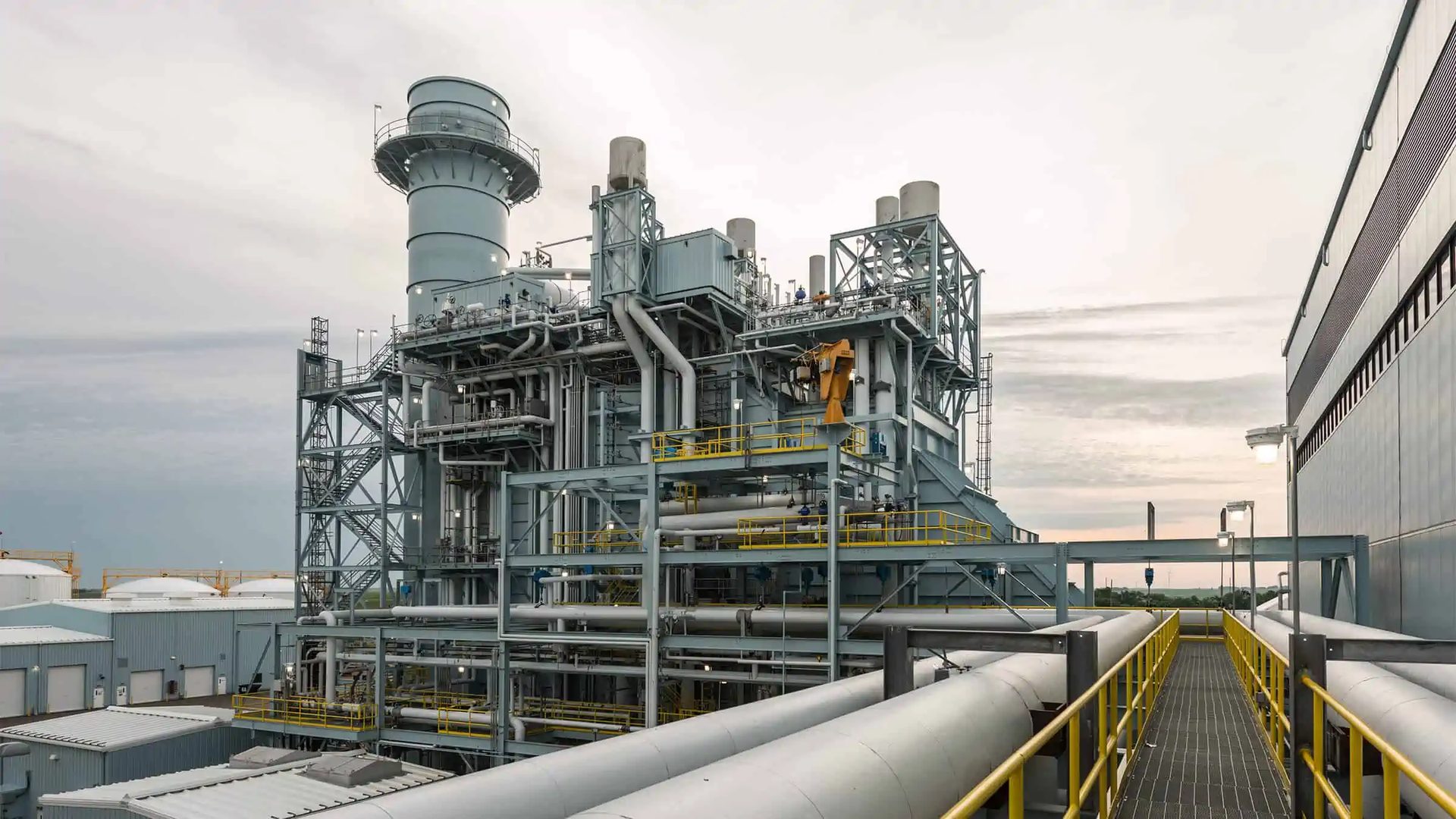
From natural gas interconnect to MV distribution, Stratum delivers a
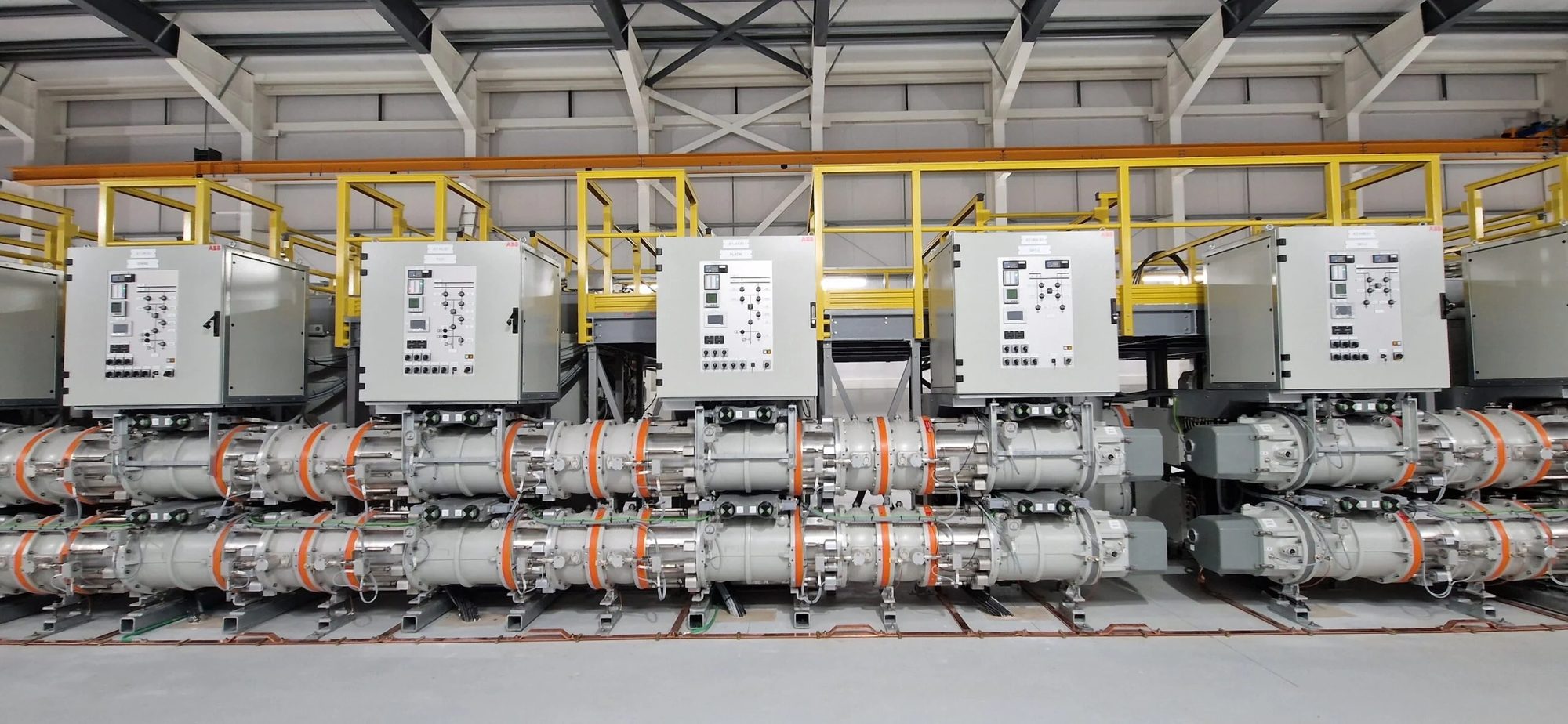
single, engineered platform. Indoor GIS switchgear, hardened
perimeters, and full-stack controls set the standard for modern,
secure generation.
PHASE III
Monetize
Firm, dispatchable capacity is delivered behind-the-meter to
hyperscalers and industrials, or into the wholesale grid.
Long-duration contracts anchor returns; optionality captures the
upside.
Security-First Design
Indoor GIS. Hardened by default.
INDOOR GIS · 145 kV
Critical infrastructure protected like it's critical.
SF₆-insulated switchgear
Hardened building envelope
Multi-vector threat model
PHYSICAL
Physical Security
Anti-ram perimeters, hardened building envelopes, and setback
distances engineered against ballistic and blast threats. Every
entry is credentialed and logged.
K-rated anti-vehicle barriers
Ballistic-rated walls at critical assets
UAS detection & mitigation
24/7 monitored CCTV & thermal
Multi-factor access control
CYBER · OT
Cyber & OT Security
Air-gapped operational networks, zero-trust identity, continuous
monitoring, and NERC-CIP-aligned controls across the full SCADA
and DCS stack.
IT/OT network segmentation
Zero-trust identity & access
Hardware-level kill switches
24/7 SOC with threat intel
NERC-CIP & NIST-800-82 aligned
OPERATIONAL
Operational Security
Vetted personnel, documented procedures, continuous drills, and
incident-response playbooks tested against real-world scenarios —
not paperwork standards.
The electric grid was built for a world of predictable, gradual load
growth — one to two percent a year, planned on fifteen-year horizons.
Artificial intelligence is not that world. Hyperscale loads are
arriving in hundred-megawatt and gigawatt increments on
twenty-four-month schedules, and the traditional utility build
cycle cannot meet them.
The supply response is structurally broken: PJM has cleared record
capacity prices and paused new interconnection studies, ERCOT is
rewriting large-load rules under a 100+ GW queue, and firm capacity
is the scarcest resource on every major grid.
Stratum exists to close that gap — developing,
building, owning, and operating the generation that delivers firm
power to the loads driving the intelligence economy, on the
timelines they operate on.
~160GWUS Data Center Load Growth by 2030
5–7YRSTypical Interconnection to Energization
24–36MOStratum Site-Control to First Power
15–25YRContracted Offtake Tenor
DEMAND ASYMMETRY
An entire new load class has arrived.
US data-center electricity demand is projected to roughly triple by
2030. A single hyperscale campus can consume as much power as a
mid-sized city, and the largest operators are planning multi-gigawatt
clusters on compressed schedules.
What it means for Stratum: we sell into a market
structurally long on demand and short on supply, to customers who
are price-insensitive and schedule-sensitive.
SUPPLY CONSTRAINT
The grid cannot catch up on its own.
PJM has effectively paused new interconnection studies. ERCOT is
revising rules under a 100+ GW queue. Even where transmission exists,
new utility-scale thermal projects take five-plus years from
notice-to-proceed to commercial operation.
What it means for Stratum: our competitive set is
the utility itself — and the utility is running at capacity.
TECHNOLOGY EDGE
Aeroderivative gas is the answer.
LM2500, LM6000, LMS100, and FT4000 aeroderivative turbines deliver
firm 100 MW-class capacity with five-to-ten-minute start times,
modular factory skids, and clear upgrade paths to combined-cycle,
hydrogen blending, and post-combustion carbon capture.
What it means for Stratum: proven, OEM-supported,
lender-financeable technology that meets hyperscale schedules.
CONTRACT QUALITY
Investment-grade cash flows, not merchant bets.
Every Stratum megawatt is underwritten against long-duration
take-or-pay offtake — fifteen to twenty-five years — with
investment-grade hyperscaler, industrial, or utility counterparties.
What it means for Stratum: contracted cash flows
with inflation adjustment and fuel pass-through, delivering
infrastructure-grade returns over multi-decade asset lives.
VERTICAL INTEGRATION
We own the stack siloed developers can't.
Traditional project finance splits generation, transmission,
distribution, and site development across four developers with four
contracts and four schedules that never align. Stratum owns the full
stack — one developer, one schedule, one accountable operator.
What it means for Stratum: we compress
time-to-energization by twelve-plus months versus disaggregated
builds and capture margin siloed developers leave behind.
SECURITY DIFFERENTIATION
Hardened assets command premium offtake.
Indoor GIS substations, hardened envelopes, UAS-aware siting, and
NERC-CIP-aligned OT security are standard on every Stratum site.
Sovereign AI, defense, and financial workloads are increasingly
unwilling to underwrite less-protected sites.
What it means for Stratum: security-first design
becomes an underwriting differentiator — qualifying us for workloads
and offtake tenors others cannot access.
Community Impact
Infrastructure that lifts its host communities.
Every Stratum site is built around a simple commitment: the counties
and communities that host our generation should measurably benefit —
not just at construction, but for the multi-decade life of the asset.
We structure that commitment around six pillars.
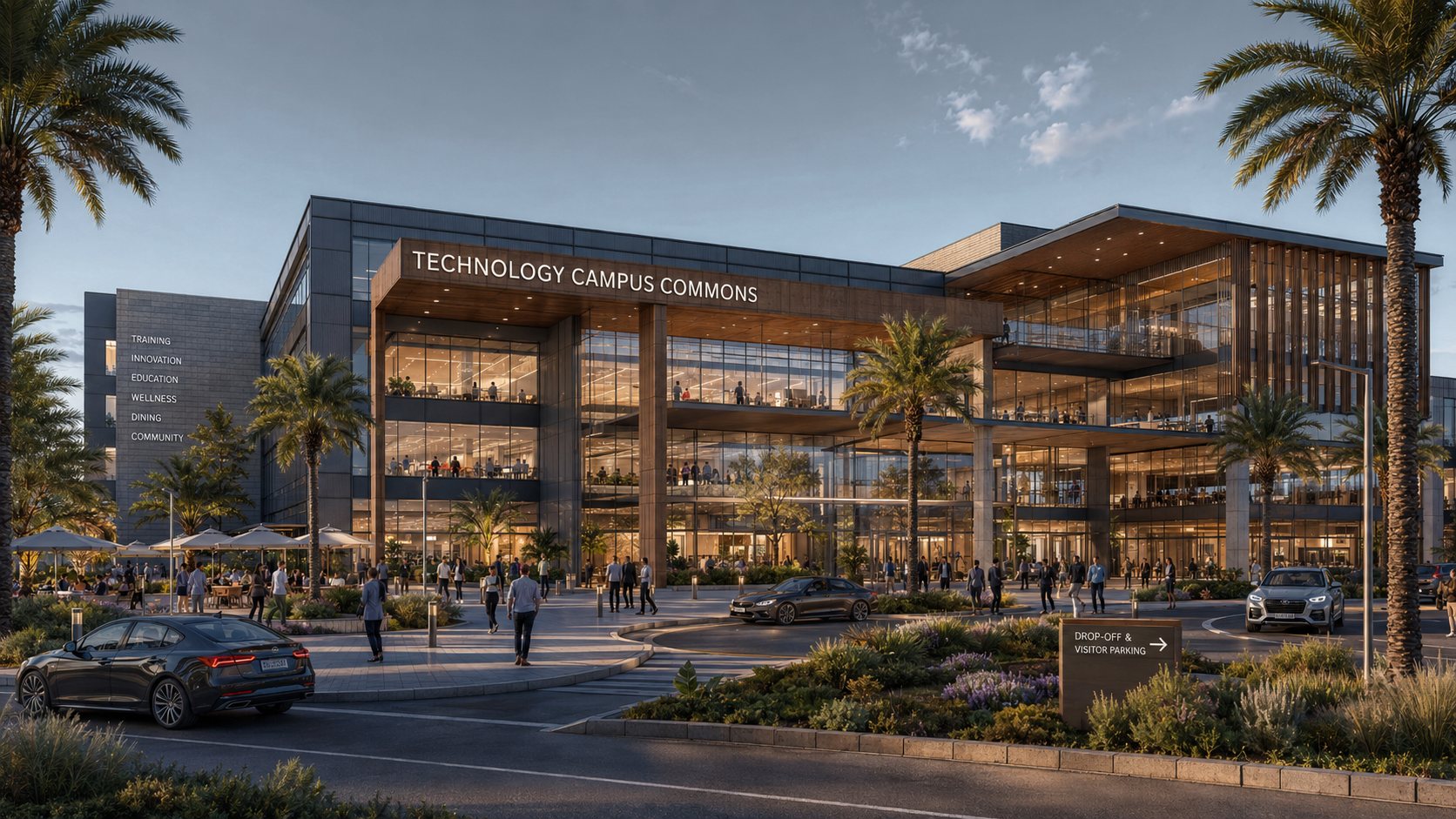
TECHNOLOGY CAMPUS COMMONS
Every flagship campus anchors a commons for its host community.
Training · Innovation · Education
Wellness · Dining · Community
Campus program · INT-01
Workforce Training
Skilled-trades apprenticeships, plant-operator training, and hiring
pipelines built with local community colleges and trade unions.
Long-term careers, not just construction jobs.
WORKFORCE
Economic Gain
Capital-intensive generation is among the most valuable taxable
property a county can host — decades of stable revenue for schools,
roads, and services, with no corresponding draw on municipal budgets.
ECONOMIC
Education
STEM scholarships, teacher grants, applied-AI curriculum support,
and direct programming partnerships with regional K-12 and
higher-education institutions.
EDUCATION
Public Utility Improvement
Stratum sites trigger upgrades to transmission, gas pipelines, fiber
routes, water service, and local roads — infrastructure that stays
long after construction ends.
UTILITY
Entrepreneurial Opportunity
Local supplier development, small-business contracting priority, and
platform support for regional entrepreneurs building around the
campus economy.
ENTREPRENEURIAL
Grid Resilience & Reliability
Dispatchable gas-fired capacity is the backbone the modern grid
depends on during extreme cold, heat events, and peak load. Our
assets reinforce regional reliability when it matters most.
RELIABILITY
Build the grid that powers what's next.
Stratum works with hyperscalers, industrials, host communities, and
capital partners to develop the power infrastructure of the intelligence
era.